Conflict Resolution

If it is possible, as far as it depends on you, live at peace with everyone. Romans 12:18

This verse in Romans 12:18 has always been intriguing to me. However, I feel that it is very appropriate to share today since we are just a week out from having celebrated Thanksgiving in the United States and, just a few weeks away from celebrating Christmas and New Year’s. The reason that I feel that this verse is appropriate, especially for this time of year, is because this is the time of year when we are around people that we may never be around any other time of the year, except for these special occasions that we celebrate together as family and friends. This verse is intriguing to me because if you break it down, it’s obviously about living at peace with everyone! But, it doesn’t start out with that declaration. It starts out by saying, if it is possible. And then it says, as much as it depends on you! So is Paul saying that it may not be possible? And is he also saying, but if it is possible, then do everything that you can that is dependent upon you to live at at peace with everyone and for it to actually happen. Therefore, if you can, do everything that you can, that is dependent upon you to live at peace with everyone!

Also notice that he says, everyone! Not just those people that you like or that you get along with naturally, but everyone. That means even those difficult, antagonizing and challenging people in your life. Anyway, part of the equation of living at peace with everyone will be navigating through being offended, being disappointed, being frustrated, mutual disagreements with one another and dealing with strong opinions and condescending comments. And, another part of making it possible and doing everything that you can to live at peace with everyone will be- engaging in loving, constructive conversations, while learning the art of conflict resolution. Conflict Resolution is defined as: a way for two or more parties to find a peaceful solution to a disagreement among themselves. The disagreement may be personal, financial, political, relational or emotional. When a dispute arises, often the best course of action is negotiation to resolve the disagreement. However, this takes love, courage and wisdom to navigate through the process, while coming to a successful and peaceful resolve for everyone involved. So, if it is possible and as much as it depends on you, live at peace with everyone!

Here Are 10 Ways to Know That You Desire Conflict Resolution:

  1. When you want to resolve the issue of conflict more than you want to prove your point or be right.
  2.  When you want to hear what’s being said- more than you want to be heard.
  3. When you are more concerned with bringing a resolution to the conflict, than you are with being right or winning the argument.
  4. When the other person’s need is greater than your ego.
  5. When you listen, and truly hear what the other person is saying.
  6. When you’re wrong, and you recognize it. 
  7. When you’re in the wrong and you admit it.
  8. When you stop saying the wrong thing, at the wrong time, in the wrong way, for the wrong reason just to prove a point.
  9. When you don’t talk until you have something that is worth hearing.
  10. When you consider how the other person feels,  above how you may be feeling.

Fear verses Faith

Fear began in the garden and ended on the cross… Fear entered in by one man: Adam. Love was perfected and it cast out fear by one man: Jesus. Genesis tells us that Adam and Eve hid themselves in shame. It states that when God called for them in the garden of Eden, that they were, “naked and afraid.” Its the first time fear was mentioned in the Bible. However, 1 Corinthians shows us that was lost in creation, was restored through Jesus. Here’s what it says: “So also is the resurrection of the dead. The body is sown in corruption, it is raised in incorruption. It is sown in dishonor, it is raised in glory. It is sown in weakness, it is raised in power. It is sown a natural body, it is raised a spiritual body. There is a natural body, and there is a spiritual body. And so it is written, “The first man Adam became a living being.” The last Adam became a life-giving spirit.” In John 3:16-17 it tells us that God so loved us… and that He didn’t come to condemn us. I John 4:18 tells us that perfect love casts out all fear.

Fear is meant to keep you where you are. It’s designed to keep you from moving forward. Religion also uses fear to keep things the way they are. Religion deals in rules, fear and judgment. However, Christianity is about a relationship with Jesus Christ. Fear will keep you from moving forward. It will keep you from seeing things change, that need to change. Jesus came to empower us, and the Bible tells us many times, in numerous passages: “do not be afraid.”

Its my desire to see people set free from fear and to be empowered to live a victorious, peaceful, joyous life. I don’t want to see people be so bound by fear that it keeps them from experiencing all that God has for them. I don’t want you to be so gripped by fear that you never know the joy of surrender or obedience. I don’t want you to live another day, with fear robbing you of joy, hope or peace.

Fear is an illusion that can distort reality and keep you from knowing, seeing, or experiencing what’s on the other side of what you fear most. Don’t allow what you fear the most; to keep you from what you desire the most.

  • Here’s how fear is defined in Webster’s: an unpleasant often strong emotion caused by anticipation or awareness of danger or uncertainty. |a state marked by this emotion. |an anxious concern caused by emotion. | profound reverence and awe toward God.
  • In the Bible, there are two words for “fear”: One is phobos, a fear that either keeps us bound up with terror or causes us to flee in face of the unknown. The Bible has hundreds of scriptures telling us not to have this kind of fear. The other word for fear is yirah, which is awe and respect. This type of fear keeps us safe from consequences. It’s a healthy fear.

*Genesis 3:9-13 – fear will cause you to doubt, hide, lie, and blame.

In the Bible the most general word in the New Testament for faith is ‘pistos’ which means: belief, confidence, or trust. Or, it could be said this way, “a trust that produces a confident belief.” Faith is trusting God even when it doesn’t make sense from our limited perspective.

*Hebrews 11 – faith will cause you to hope, believe, trust and have confidence.


“Without Faith it is impossible to please God.”

1. Faith is the beginning of all things.

2. Faith pleases God.

3. Faith allows us to receive salvation.

4. Faith gives us access to God.

5. Faith is required, to live the life God desires for you to live.

* We must have faith that God is who says He is!

* We must have faith that we are who God says we are!

* We must have faith that God will do what He said He will do!

You must remember:Faith is not taking matters into your own hands; it’s putting ‘it’ in Gods hands and trusting Him for the outcome.” Someone said, “everything you ever wanted is on the other side of fear.” Don’t let fear dictate your decisions. We all have fears, but pushing past your fears will determine your success and establish your peace. To counteract fear you will need the antidote of faith.

***An antidote is: a remedy to counteract the effects of something.

Another good antidote to fear is: “Fear the right thing!

In other words: If you are going to be afraid, be afraid of never accomplishing your dream, be afraid of not walking in freedom, be afraid of not experiencing what you truly desire to experience. This fear of “the right thing”… should give you the courage and determination to do the right thing, that in turn, will grow your faith.

*When Fear Knocks; Answer With Faith.

> You can believe the lie or thought that will produce*(fear) or

> You can believe the fact or truth that will produce *(faith).

> Fear will create a stronghold that binds.

> Faith will create a strong-tower that liberates.


Common Fears That We All Face… the Stronghold That Fear Produces… and the Faith Answer for That Fear: Continue reading “Fear verses Faith”

The Greatest of These…

Click Text for Short Video Clip: the greatest is love

When you say nothing at all…

Do you ever feel like your words are not being heard? Have you ever felt like what you say isn’t making a difference? Whether you speak or whether you are silent; both must be done in love. We should all have a desire to speak the truth, but even the truth has to be spoken in love! However when we are silent most of the time it is done for manipulation through pouting. In Luke 19 Zacchaeus climbs a tree to see Jesus. When Jesus looks up and sees him He tells him to come down because He needs to go to his house today.

Zacchaeus was a crooked tax collector who cheated people out of money. Jesus knew it and Zacchaeus knew it, but nothing was ever spoken. And without one word “spoken” he repents and the fruit is restitution. He not only says he was wrong he tells Jesus he will give back with interests what he has stolen from the people.

Jesus never said a word about what Zacchaeus should or shouldn’t do or for that matter what he had  or hadn’t done. Zacchaeus repented without Jesus saying a word!  Moved by the audacity of Jesus’ undeserved love and acceptance, Zacchaeus publicly repented of his acts of corruption and vowed to make restitution for them, and held a feast at his house. I want you to know love is a two way street. Jesus received Zacchaeus just the way he was but Zacchaeus received Jesus into his home. Love has to be given, but it also must be received.

There is a lot of talk about law and love, grace and truth, love and grace. I want you to note Jesus never said anything about Zacchaeus’ wrongdoings but Jesus also never tried too justify what he had done as being ok. Jesus never said, “Thats o.k. Zacchaeus you don’t have to give back what you have taken.” No. He allowed him freedom but He also allowed him the opportunity to repent and be changed. It’s both! Love and grace, law and love, grace and truth.

Sometimes love speaks, sometimes love is silent, sometimes love presents the truth, but no matter how our actions are displayed it should always be done in love! If your words or silence are not done in love they will sound like a “*clanging cymbal” to the person who is receiving them. (*I Corinthians 13)

The way to know your speaking more “truth” than “love”:

1. When you want to prove your point more than resolve the issue.

2. When you want to be heard more than you want to hear.

3. When you want to be right more than you want a resolve.

4. When your ego is more important than the person’s need.

5. When you listen but don’t hear.

6. When your wrong but don’t recognize it.

7. When you are in the wrong but don’t admit it.

8. When you say the wrong thing at the wrong time in the wrong way.

9. When you talk so much people don’t value what you do say when you say something worth hearing.

10. When you consider how you feel more than how others feel.

Many of us speak the truth, but not in love. We speak more truth than love. Speak the truth, but do so in love. Say what you mean and mean what you say, but don’t be mean!

2 Minute Take Away – “A Father’s Love”

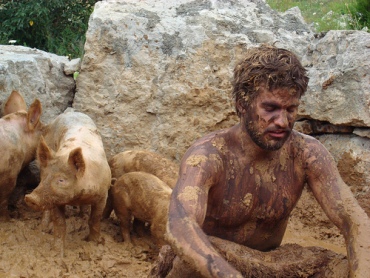
The prodigal son is a familiar story to most of us. Luke calls him a lost son with a “prodigal” (wasteful) lifestyle. It is the story of two sons and a Father. The one son appears to be logical, sensible, obedient and faithful while the other son appears to be foolish and rebellious. The one son stays and faithfully works for his Father whereas the other son asks for his inheritance, leaves home spending every last penny of what was rightfully his on a rebelliously lavish lifestyle. The prodigal returned home, falling into the arms of a Father that ran to him. The Father ran toward his son, kissed him on the neck, receiving him back as his son. I preached this familiar story on Father’s day entitling the message: “A Father’s Love.” This video clip is the last sixty seconds of that message. Here are a few things that became revelation as I shared the message:

1. The story tells us the son “came to his senses” and desired to return home. It reveals there was a famine in the land and the lost son was in want. No one gave him anything. My feelings are if the boy wasn’t in want and there wasn’t a famine that had come on the land he might not have came to his senses and desired to return home. If there would have been plenty or someone would have provided for him he might have stayed in the current state of mind that he had been in; but instead he came to his senses and returned home. Lesson: Don’t despise the things that God might use. There are times when things could turn bad so one would seek what’s better and return home. He said, “My Father’s servants have it better than I do.”

2. One translation says, “He began thinking clearly again.” When he did, He said, “I will get up and go to my Father’ house. I will say, “I have sinned against heaven and I have sinned against you. I am no longer worthy to be called your son, make me one of your servants.” The most amazing thing about what he had rehearsed out loud to say to his father was, he never got to finish what he was going to say. He said, “I have sinned against heaven and earth and I have sinned against you.” He also said, “I am no longer worthy to be called your son.” But before he could get the last words out of his mouth, which would have been, “make me one of your servants.” The Father said, “Quick, bring the robe and put it on him!” “Put the ring on his finger and the sandals on his feet, my son has returned home!” Lesson: Sin doesn’t change God it changes us. Before the son could ever get the words out of his mouth, ” make one of your servants” the Father called him son. God has made us worthy through the works of Christ. The works of God’s grace redeems us. The love of God in us produces “good works” that glorify Him and edifies one another. Grace is not a “free ticket” to do what we please, it is an empowering work that enables us to do what pleases the Father. Note: It says the servant “put” the robe, the ring and the sandals “on” the son. In order for that to happen the son had to lift his foot, extend his arms and open his hand. You can’t stand in rebellion with stiff arms and a closed hand and receive the provisions of grace. God in Christ has made us worthy.

3. The Ring, The Robe, The Sandals and The “Fatted Calf”. The passage says. “bring the “best” robe, and put it on him.” A robe would have brought warmth and comfort. It would have been a new covering. The ring would have represented family and identity, it would have probably been a family heirloom and might have even had a family crest engraved on it. The sandals would have represented sure footing and walking in the new things which were ahead of him; walking into the promises of God and out of the mess of man. The “fatted” calf would have spoken of the “abundance” of God’s provision. Lesson: God in Christ clothes us in His righteousness, gives us His identity, and empowers us to walk in His love and grace while receiving the provision of His promises all along the way.

The Father’s love never changed. He loved His son who stayed, and He loved His son who returned Home. The son who had been faithful didn’t rejoice in his brother’s return home. The passage says the Father tells the angry son that what He was doing was the right thing to do. God is righteous. Sometimes what we view as not being fair might be a “matter of the heart” and an overflow of our attitude. You might need to learn to extend grace. Not because you agree or understand, but because you might need it extended in your time of need as well. The Father says, “my son was lost but now he is found, he was dead and now he is alive again!” Anyone who has experienced the “Father’s Love” can say, “I once was lost but now I’m found, I was blind, but now I see!”


Good News

20130402-095258.jpg

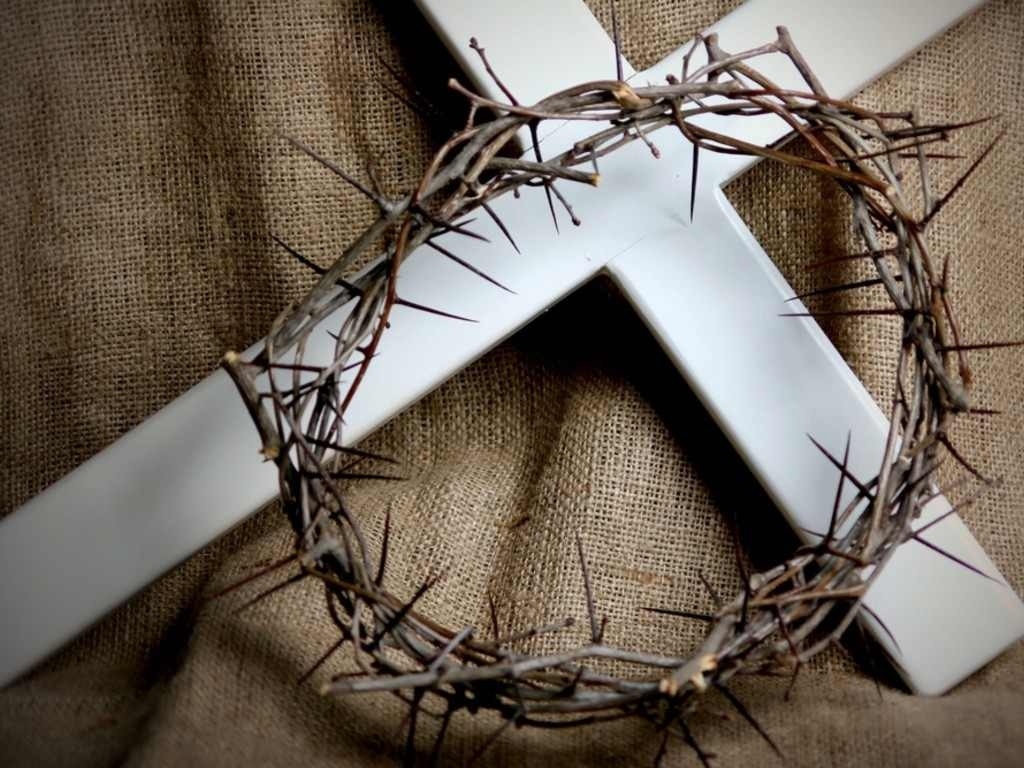
Have you have ever been at a place in your life where could have used a little good news? The word Gospel simply means “Good News”. The Bible is good news because it shows us the faithfulness of God and how it triumphs over the failures of man. The “Good News” is that Jesus lived, loved, died, rose again and one day will return to take us to be with Him forever. Now I don’t care who you are, that is good news. The story of this good news could be told in 3 simple words: a manger, a cross and an empty tomb. The failure of man and the faithfulness of God can be seen in 3 garden scenes. The garden of Eden shows us man’s failure and points to the manger. The garden of Gethsemane shows us Christ surrender and points to the cross. And the garden of the tomb shows us the victory we have through Christ rising from the dead and points to a stone rolled away so we can look in see that it is empty. And it shows us a Jesus who is alive so He can live in our hearts. The good news is God’s faithfulness is greater than our failures and that’s “Good News“.