Covered

Joseph, the one who famous for his robe of many colors was his father’s favorite son. I believe there were two reasons for this. First, he was the firstborn of his daddy’s heartthrob Rachel, and secondly, Joseph had a heart for God and heard from Him in a uniquely special way. You remember the story don’t you? Joseph’s father Israel, aka Jacob, had a brother named Esau. There was some deception, some stew, and the great exchange. The birthright was surrendered and the plot continued to unfold. There was also a wrestling match won by God and Jacob became Israel. Now Jacob had a “thing” for Rachel. But there were two sisters Rachel and Leah. Their father, Laban, who would later become Jacob’s father in law… twice, had some mischievous deception of his own… he tricked Jacob into marrying the wrong sister, Leah. Anyway, Joseph’s working for his father in law finally paid off. He married Rachel (his dream girl) and their first child was Joseph. That’s right, his daddy’s favorite, and the coat he wore that was made by his father, represented what everyone already knew. The coat, however, seemed to be a bigger deal to his brothers and everyone else then it did to Joseph.

Joseph was a dreamer. But, when he told his dream to his brothers, they didn’t like it. As a matter a fact, they got so mad they stripped him of the coat of many colors and through him in a pit. While they were having some lunch, they began to feel bad for what they had done. So, they drug him out of the pit and sold him to some slave traitors that just happened to be passing by. They then took the coat they stripped him of and dipped in blood, took it to their father, and told him that Joseph their brother, his son, had been killed by wild animals. Their father wept bitterly. However, it was all a lie. Joseph was alive. The coat nonetheless, was never mentioned in the story again. All the while, Joseph never stopped dreaming, and he continued to walk in the favor of his God. Although the coat was history, what it represented lived on in Joseph long after the coat was forgotten about.

He didn’t waiver when he stripped of his coat. That’s because he still possessed what it represented. What he had was based on an internal “knowing”, not an external “seeing”. His earthly father gave him the coat. But, his Heavenly Father gave him the promise. The promise was eternal and internal, not external or maternal. Joseph knew that what he was wearing wasn’t who he was. In other words it wasn’t his identity, it was just a reminder of what he already knew. He was cOVERed! He was a dreamer favored by both his earthly, and his Heavenly Father. He knew that what was happening at the moment in his present situation wouldn’t deter what was going to happen in his promised future. He was a dreamer with a promise; even in the midst of problems. When Joseph was sold to the slave traders that were passing by he was probably given a slave’s robe. But, he didn’t allow that define him because it wasn’t who he was. He was a son with a promise, not a slave! When he was purchased to serve at Potiphar’s house he was probably given a servant’s robe. But, he didn’t allow it to affect him because that wasn’t who he was. He was a son with a promise, not Potiphar’s servant. When he was thrown into prison on false accusations he was probably given a prisoner’s robe. But, he didn’t let that affect him because that wasn’t who he was. He was a son with a promise, not a prisoner. Joseph was covered! He didn’t ask for it, he just received and walked in it. His earthly father gave him the coat of many colors and no one could take what it represented. It represented an earthly blessing and heavenly favor.

Joseph was thrown in a pit, sold to slave traders, purchased by Potiphar, betrayed by Potiphar’s wife, forgotten about in prison but, he never lost sight of his promise. Everything that was put on Joseph was given by someone else. His daddy put the robe of many colors on him. The slave traders put the robe of slavery on him. Potiphar put the robe of a servant on him. The jailer put the robe of a jailer on him. Remembered this: what others put on you doesn’t have to define you! People will put labels, opinions, and expectations on you, but don’t let it define you. When they took Joseph’s robe they didn’t take what it represented. In other words, when Joseph was stripped of his robe of many colors he didn’t stop dreaming or believing and the favor and blessings didn’t stop either! The coat represented his dream, and his promise. But, it wasn’t his dream or promise, it was a robe. Joseph was cOVERed with a colorful coat made by his father. It represented favor, but, it wasn’t his favor. His favor was his favor. Even in the midst of problems Joseph had a promise. Even in the midst of frustration he had favor. That’s why Joseph didn’t pout in the pit, plead at Potiphar’s House, or protest in prison. Instead, he allowed God to elevate him to a position of power so that he could provide prosperity and provision for those that had caused him problems. You see when you know your cOVERed it doesn’t matter where you are, or what you have, or what someone is trying to put on you. What matters is that you know who you are, and most of all, whose you are. When you know your cOVERed you can get OVER whatever is your going through, so you can get to where it is your meant to be! No matter what you’re going through… God’s got you cOVERed!!!

PeaceKeeper PeaceMaker

“Face It!” (James 3:13-18)

Jesus said, “I’ve come that you might have peace; not as the world gives but that only I can give.” Jn. 14:27

“I will give peace to the one who’s mind is fixed on me.” Is. 26:3

“The peace of God will transcend all understanding and guard your hearts and minds in Christ Jesus.” Phil. 4:7

“Blessed are the PeaceMakers for they will be called the children of God.” Matt. 5:9

*A PeaceKeeper will avoid conflict by treading lightly around the real issue or by acting like a real issue doesn’t even exist.

*A PeaceMaker will strive to resolve conflicts and seek to reconcile conflicted relationships.

*A PeaceKeeper is a mediator (takes middle ground acting between two parties in a disagreement).

*A PeaceMaker is a reconciler (One who settles or resolves differences in a conflict).

> It’s my desirethat youhave peacein your heart, in your mind and in relationships with others.

You will be miserable if you don’t have peace.

***It takes wisdom to discern when to make peace and when to keep peace.

⁃ You can only make peace when you first have peace yourself.

⁃ You can only make peace when those in conflict desire peace.

⁃ You can only make peace when you begin to sow peace.


How Do You Strive to Make Peace? *(You can’t fix what you won’t face).

1.Ask God for wisdom and a way.

2.Make the first move if no one is else is moving and you feel led.

3.Don’t wait on someone else to make the first move; especially if you are the one in the wrong.

4.Don’t accuse or excuse.

5.Don’t build hateful or hurtful opinions when you don’t know all the facts.

6.Don’t wait until it’s too late.

7.Know that sometimes the only thing you can do is keep the peace; but don’t let it steal your peace.

8.Realize making peace is not contingent upon you alone.

9.Focus on the person more than the problem.

10.Focus on reconciliation more than being right.

11.Stop talking and start listening.

12.Quit confessing what needs to be forgotten.

Peace is an atmosphere that is produced by proper patterns that embodies a Spirit-Led Christ centered life.

To be a PeaceMaker means you produce peace in situations, circumstances and, in the lives of others by giving what you have received from God first. His peace!

As much as it depends on you, leave at peace with everyone.

Sometimes you have to face it to fix it! But, sometimes you have to release it to receive true peace.

All You have is All God Needs

In II Kings Chapter 4 a widow of a prophet approaches the prophet Elisha with a request for help. Elisha responds with a question, “What do you have in your house?” The widow replies, “Absolutely nothing! Expect, for a little flask of oil.” Elijah tells her to go to her neighbors and borrow as many empty jars as you can find. He instructs her to take the oil she has and start pouring it into these empty jars until they are all filled. She filled enough jars of oil to incur enough money to pay off all her debt. And, she still had enough left over for her and her sons to live off of.

Now let me ask you a question: “Who had the oil?” The widow did, right? Let me ask you another question: “Who made the oil pour in abundance?” “That’s right, God did!”

There was another widow in the book of I Kings Chapter 17 that had a little flour and a small amount of oil. There was a drought that came on the land that Elijah had declared. Nevertheless, he ask her for some water to drink and for a small morsel of bread to eat. She swore by the Lord that she only had enough flour and oil to bake a small cake for her and her son. She was going to gather some sticks for a fire to bake the cake. She told Elijah that her and her son would eat the cake and die. She thought this would be her last meal because it was all she had.  Elijah said, “Do as you said, but make me a cake first. Afterwards, make you and your son a cake. If you do this, as sure as the Lord God lives, your flour and oil will not run out.”

Let me ask you a question: “Who had the flour and oil?” That’s right, the widow of Zarephath did. Let me ask you another question: “Who made the flour and oil not run out?” “That’s right, God did!”

There is another story of a little lad who had some bread and fish packed for his lunch. He just happened to be among thousands of people who were hungry and didn’t have anything to eat. Jesus had instructed, helped, and healed the people in the crowd that day. But, the hour was getting late and the people were hungry. So Jesus asked His disciples what there was for the people to eat. His disciples reported: “Nothing! Except, for a couple pieces of bread and a few small fish.” There was no food in sight, except for the little lad’s lunch. Jesus said, “Bring it to me.” He took the loaves and fish and gave thanks and blessed it. This meant He was thankful for what He had, even though it wasn’t enough. The words “blessed it” means that He spoke well of it, even though it was not enough to feed the crowd gathered. The story tells us that Jesus had compassion on the crowd. This word compassion is used five times in the Bible where Jesus performed other miracles. It is the same word that is used in the story of the Good Samaritan. Compassion is when your passion compels you to do what you normally wouldn’t do. When you don’t have enough, begin to be thankful and bless what you do have. Then stand back and watch God begin to multiply it. As a side note the little lad didn’t eat his lunch until he gave it away. God is a God of more than enough! And all you have is all He needs!

Now let me ask you a question: “Who had the fish and bread?” The little lad did, right? Let me ask you another question: “Who blessed the fish and bread?” “That’s right, Jesus did!” And one more question: “Who multiplied the fish and bread?” “That’s right, God did! 

ALL YOU HAVE IS ALL GOD NEEDS!!! Nothing less and nothing more. In all of these stories what the people had, appeared  to them as “not enough.” As a matter of fact when they were asked what was available or what they had, they all said, NOTHING!Except  for a little __________. The problem is you look at what you have as insignificant; because it’s not all you need or desire. But I want to remind you today, that all you have is all you need, because you serve a God of more than enough!

  1. Your access to more is only limited by your capacity to receive. *(note the widow with the empty jars). When she ran out of empty jars, the oil stopped.
  2. What you have the faith to give away will become what someone else has the opportunity to receive. *(note the little lad with the lunch). The little lad blessed everyone with their own lunch that day. *(plus twelve baskets full left over)
  3. You only access more and give away what you have in a act of faith, not in a moment of fear. *(note the widow of Zarephath). She was afraid that her and her son would just eat and die. But, when she fed the prophet first, her obedience paid off for her and her son later. When you feel like what you have is not enough, it will usually produce fear.

Here’s what fear will do:

  • Fear will keep from doing anything about the problem.
  • Fear will keep you from finding a way to change your situation.
  • Fear will make you believe there’s not an alternative to access more.
  • Fear will cause you to hold on to what you have; ultimately keeping you from more.

I want you to know today: “ALL YOU HAVE IS ALL GOD NEEDS!!!”

Potential

Everyone one has potential, you included. You were created in the image of God. When you were born God didn’t scratch His head and say, “now what am I going to do with this one?” He had a plan in mind before you were born. Listen to what the Lord told Jeremiah: “Before I formed you in the womb I knew you, before you were born I set you apart; I appointed you as a prophet to the nations.” This means before the bubble gum cigars were passed out and Jeremiah cried his first cry the Lord knew him, set him apart, and had plans for him. Just like Jeremiah you were created with a purpose in mind; but your potential has to be developed in the process of discovering your purpose. The Bible tells us that we are fearfully and wonderfully made. It goes on to say that we were known by God before we were born and that He knit us together while we were in our mother’s womb. Therefore, you came from the seed of a man, through the womb of a woman, but, you came from the heart of God. The same Spirit that raised Christ from the dead lives on the inside of you and that alone has enough potential to change your life, and the lives of everyone else you come in contact with!

Your purpose is unique and your potential is powerful. Your potential is the existing ability you have to develop the future you desire. Your potential already exists, it just has to be realized, released, and refined before it is ever expressed by you, or experienced by others. #believeit

I want use these 3 words and 3 familiar Bible stories to prove the power of potential:

  • Gideon had to realize his potential before it was ever exhibited. The Lord sent an Angel to tell Gideon he was a mighty man of valor and was going to be used by God to lead a mighty army that would win the victory over their enemies. When the angel called Gideon a “mighty man of valor” Gideon looked around to see who the angel was talking to. You see many times your potential is seen by others before it is ever realized by you. Your potential may be recognized on the outside by others before it is ever realized on the inside by you. However, you have to believe it before it will expressed by you or experienced by others. I can tell you all day, everyday that you can do it, but if you don’t believe you can, chances are you won’t. Your limitations; don’t limit God. The only thing that limits God is your doubt and most of the time you probably don’t doubt God, you doubt yourself! You don’t have to be the greatest, you just have to be willing. You do your part and God will do His part. Like Gideon, not everyone will go with you into battle. God knows who needs to “walk it out” with you. Surround yourself with people who will speak to your potential. God believed in Gideon way before Gideon believed in himself. When you realize God lives in you and He believes you can do it, you will discover, develop, and do what God is asking you to do. You have the potential, it just has to be realized so it can be expressed by you, and experienced by others. #believeit


  • David had to release his faith by slinging the stone or the giant coming down would have never came to fruition. David could have had all of the ability in the natural realm to use a slingshot. He could have had all the faith it took to release the stone in the spiritual realm. However, he had to release the stone before it could ever kill the giant. I believe David had faith. He had seen God deliver the lion and bear into his hands. David had been faithful in the small areas of life. Areas like tending to his father’s sheep on the backside of a mountain in obscurity, while Saul and his brothers were on the front lines of the biggest battle in the region. David practiced in private what gave him skills in public. Don’t waste those times of obscurity when no one is watching; instead use it to develop your potential. Don’t value peoples opinions over God’s promises or you will never see your full potential manifest. Saul, and David’s brothers had their opinions about David, but remember this: What people say; doesn’t trump what God can do. What other people say about you can’t override or overrule what God can do through you! You have the potential to see giants fall. Just like David, you have the potential to release your faith; you just have to believe you belong! #believeit


  • Daniel, Shadrach, Mischach, and Abednego had  great potential but that potential became even greater when it was refined. Sometimes your potential grows when you are pressed, tried, or tested. Daniel, Shadrach, Mischach, and Abednego determined to do the right thing and that determination became their distinguishing difference. Your potential will be accentuated as you discipline yourself to what’s right and focus on what matters. The book of Daniel chapter 1 tells us that Daniel, Shadrach, Mischach, and Abednego were skilled, good looking, smart, capable of learning and able to be taught. The king understood that these men had potential. The potential to become leaders and teachers in his kingdom. However, the king didn’t say, “we will now serve the God of Daniel” because Daniel was smart and good looking. The king made this statement because Daniel put his faith in God and God was faithful towards Daniel. The 3 Hebrew children (Shadrach, Mishach, and Abednego) were walking in the fire when the king said, “didn’t we throw 3 men into the fire?” And the man said, “as matter a fact we did.” Then the kings said, “there is a fourth man in the fire and it appears to be the Son of God!” God didn’t walk through the fire with the 3 Hebrew children because they were smart and good looking. He walked through the fire with them because He is faithful. God sees the potential for all of us to become more and be better. But sometimes he uses trials of fire to burn up what binds us and to do away with those things that hinder our potential. The 3 Hebrew children came out of the fire and the only thing that had burned up is that which they had been bound by. Sometimes the refining of your potential is brought about by being loosed from those things which bind you. Daniel, was thrown into the lion’s den and Shadrach, Mishach, and Abednego were thrown into the fire by the hands of men. But they were delivered out by the hand of God. Just like Daniel and the 3 Hebrew children people will use your potential to resolve their problems; but God will use your problems to refine your potential. You have potential, but you haven’t seen anything until it has been refined! #believeit

The Power of the Cross

THE CROSS

The instrument of a slave’s death, associated with the ideas of pain, guilt, and disgrace. “The very name,” writes a Rabai, “ought to be excluded not merely from the body, but from the thought, eyes, and ears of Roman citizens.” The Hebrews, having no term for it as not being a punishment in their nation, called it “warp and woof.”

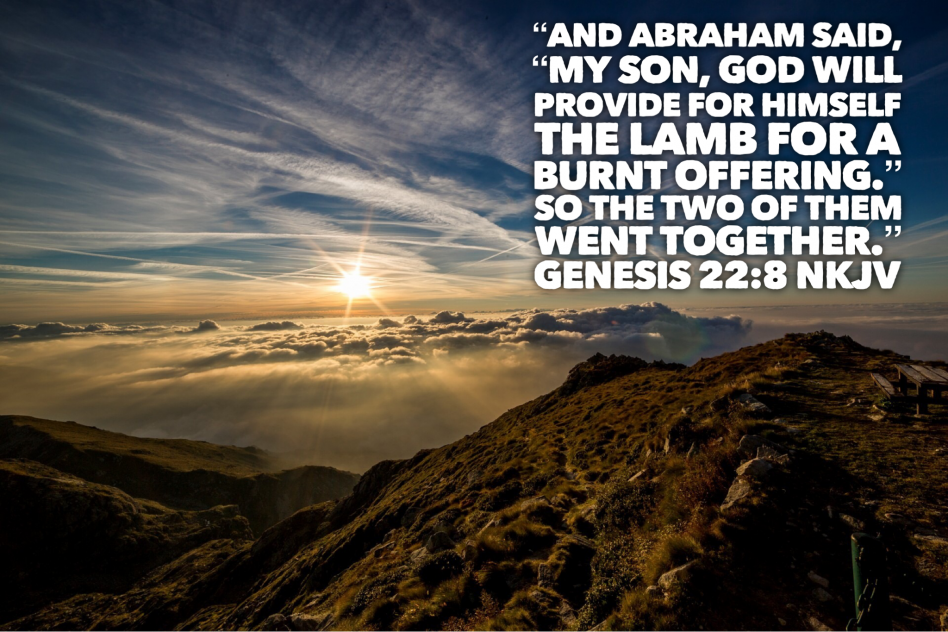
Scourging generally preceded crucifixion: so Jesus foretold in Isa 53). Pilate had probably hoped the Jews would be content with this scourging, and still let Him escape crucifixion. Jesus bore His own cross toward Golgotha outside the city, but sinking exhausted probably He was relieved, and it was transferred to Simon of Cyrene; prefigured in Isaac carrying the wood (Gen 22:6; and in Isa 9:6, “the government shall be upon His shoulder”). Jesus’ sacred and lacerated body was raised aloft, the hands nailed to the transverse beam, the feet separately nailed to the lower part of the upright beam so as to be a foot or two above the ground (others think the two feet were pierced by one and the same nail). He would meet suffering consciously. Near death, to fulfill Ps 69:21, He drank of the sour wine or vinegar kindly offered Him on a sponge. His death was hastened by rupture of the heart (see Mark 15:23; compare John 19:28; Matt 27:48). The sour wine called posca was the common drink of the Roman soldiers. Pilate marveled at His speedy death, crucifixion often not terminating in death for days. The approach of the Passover sabbath, one of peculiar solemnity, led to his permitting the Jewish law to be carried out which forbids bodies to hang after sunset (Deut 21:22-23). His legs could not be broken, because the Passover type must be fulfilled (Ex 12:46).

The agony consisted in: (1) the unnatural position of the body, causing pain at the least motion; (2) the nails being driven through the hands and feet, which are full of nerves and tendons, yet without a vital part being directly injured; (3) the wounds so long exposed bringing on acute inflammation and gangrene; (4) the distended parts causing more blood to flow through the arteries than can be carried back through the veins; (5) the lingering anguish and burning thirst.

The Power of the Cross Produced:

  1. Restitution
  2. Restoration
  3. Redemption
  4. Healing
  5. Hope
  6. Freedom
  7. Forgiveness
  8. Resurrection
  9. Renewal

  • RESTITUTION- Restoring to the rightful owner something that has been taken away, stolen, lost, or surrendered.
  • RESTORATION- To return to a former state; to bring back to spiritual health.
  • REDEMPTION – In the Old Testament redemption was applied to property, animals, persons, and the nation of Israel as a whole. In nearly every instance, freedom from obligation, bondage, or danger was secured by the payment of a price, a ransom, bribe, satisfaction, or sum of money paid to obtain freedom, favor, or reconciliation.

In the New Testament, redemption refers to salvation from sin, death, and the wrath of God by Christ’s sacrifice. In the Old Testament, the word redemption refers to redemption by a KINSMAN rescue or deliverance and ransom In the New Testament it refers to loosing and loosing away.

The New Testament emphasizes the tremendous cost of redemption: “the precious blood of Christ” which is also called an atoning sacrifice, “a propitiation by His blood” Believers are exhorted to remember the “price” of their redemption as a motivation to personal holiness. The Bible also emphasizes the result of redemption: freedom from sin and freedom to serve God through Jesus Christ our Lord.

  1. You Can’t be Redeemed Without a Redeemer.
  2. There is no Redeemer if There is no Need For One.
  3. A Redeemer Does What Only a Redeemer Can Do.

  • HEALING -Lit., in its meaning of making whole or well, as in Ecclesiastes 3:3. In this way it occurs in prayers for restoration to health (Numbers 12:13; Psalms 6:2; Jeremiah 17:14); and also in declarations as to God’s power to restore to health (Deuteronomy 32:39; 2 Kings 20:5-8). Isaiah 53:5 – But he was pierced for our rebellion, crushed for our sins. He was beaten so we could be whole. He was whipped so we could be healed.

TYPES OF HEALING:

  1. Physical
  2. Emotional
  3. Relational
  4. Eternal

  • HOPE – is “Confident expectancy”. In the Bible, the word hope stands for both the act of hoping and the thing hoped for. Hope does not arise from the individual’s desires or wishes but from God, who is Himself the believer’s hope: “My hope is in You” (Ps 39:7). Genuine hope is not wishful thinking, but a firm assurance about things that are unseen and still in the future. In contrast to Old Testament hope, the Christian hope is superior.

(Romans 8:24-28] Hope IN:

  1. Who He IS
  2. What He DID
  3. And What He CAN DO

  • FORGIVENESS – the action or process of forgiving or being forgiven.
  • FREDOM – the state of not being imprisoned or enslaved.

Forgiveness is not an easy thing to talk about, nor is it an easy thing to do. 1) Jesus talked about forgiveness with His mouth. 2) Jesus demonstrated forgiveness with His life. 3) Jesus demonstrated forgiveness with His life. 4) Jesus manifested forgiveness in His death. Jesus manifested and demonstrated forgiveness at the most difficult time of His life (emotional, physical, and spiritual]. Jesus gave forgiveness to those who didn’t deserve it. Jesus talked about when He gave the Lord’s Prayer and He says it again from the cross.

“Jesus was God’s son. Everything He accomplished was because of God’s love and the Spirit that empowered Him.” The Power of the Cross produced ‘Redemption & Restoration’ – ‘Hope & Healing’ and ‘Forgiveness & Freedom’. The Spirit empowered Christ to say 7 things from the Cross. But when He said, “Father forgive them” it produced “Forgiveness and Freedom for all. There is freedom in forgiveness: 1) Christ forgave those who did not deserve it. 2) Those who did Him wrong. 3) Those who falsely accused Him. 4) Those that forsook Him.

HOW DID JESUS FORGIVE?

  1. He Confessed It.
  2. He Quoted Scripture.
  3. He Talked to God His Father.

FORGIVENESS IS A MUST!

  1. Forgiveness is a must for you to have unhindered relationships [God & man].
  2. Forgiveness is a must for you to have peace [it’s for you, not them].
  3. Forgiveness is a must for you to have freedom [it holds you captive not them].
    1. Forgiveness is for you.
    2. Forgiveness is for others.
    3. Forgiveness has to be given.
    4. Forgiveness has to be received.
    5. Forgiveness comes from God.
    6. Forgiveness brings FREEDOM!

  • RESURECTIONthe action or fact of resurrecting or being resurrected:
  • RENEWAL – an instance of resuming an activity or state after an interruption:the state or process of being made spiritually new in the Holy Spirit.

THE CROSS PRODUCED RESURRECTION & RENEWALbut the most amazing thing about Resurrection and Renewal is He has to “APPEAR” or “SHOW UP” to accomplish either or both. The most amazing part of the Resurrection is that: “HE APPEARED Mark 16:9 says; “Now when He rose early on the first day of the week, He appeared…”

He appeared to Mary Magdalene who He cast 7 demons out of… He appeared to the 2 on the Damascus Road who were hopeless and helpless. He appeared to James His brother who truly didn’t understand Him. He appeared to Paul who persecuted and killed Christians. And who was against the Christian church. He appeared to Thomas who doubted. And he appeared to Peter who denied Him three times (do you love me three times). The appearances are so important because it shows Christ alive, but it also shows how we can relate to all if not all these people and situation and it also shows God’s desire to relate to us… He keeps showing up! His appearance produced Resurrection and Renewal… Jesus resurrected their hope and renewed their belief.

Jesus Appearing Was:

  1. Personal (He appeared to people and related to them where they were)
  2. Patient (He kept showing up-even when people didn’t believe or expect it)
  3. Pertinent (logical evidence that pertained to Christ’s resurrection)
  4. Passionate (He was emotional and intense – “It is I” – “touch me”)
  5. Real (He met them where they were – He ate with them)
  6. Reassuring (He calmed – He didn’t condemn)
  7. Revealing (He shared and showed – they talked and touched)

He kept showing up and Jesus appearing “Resurrected” their Hope and “Renewed” their belief in Him. And He wants to do the same for you today!

Fascinated With the Familiar

“Fascinated With The Familiar”

Some Things 2 Consider: 

Vision- “What you see will determine what you experience!”

A New Thing- If it’s new that means it’s never been done; but, that also means you have to recognize it to receive it!”

Fascinated with the Familiar- “Don’t become so fascinated with the familiar that you become frustrated and forfeit your future!”

Like most of you I like the familiar because it is familiar… and the familiar brings security; because, as good or bad as it is… you know what to expect.

We are all comfortable with the familiar. That’s because it’s familiar. However, If the future is going to be any different than the present; chances are it probably won’t look familiar.

Here are 3 things that the familiar can cause:

1. The familiar will cause you to be comfortable with what is; while keeping you from what could be.

2. The familiar will cause you to become critical of what is currently taking place; without initiating anything that will make it different or better.

3. The familiar will cause you to rely on what you know or see; instead of relying on God to do what only He can do.

Here’s 3 things to remember about the familiar:
1. The familiar is not bad unless it keeps you bound to what is.

2. The familiar is not bad unless it keep you bound to promiscuous patterns.

3. The familiar is not bad unless it keep you bound by hopelessness that hinders.

In John chapter 5 there is a story of a man on a mat by a pool called Bethesda. This man is waiting for the water to be stirred so he can be healed. Through his conversation with Jesus he reveals his frustration with people; this frustration has been been brought about by the all too familiar patterns of life that are taking place by the pool…

The Familiar Will Cause You To:

1. Complain- complaining displeases God and it will keep you stuck where you don’t want be; longer than you want to be.
– don’t complain about what you allow.
– don’t complain about what you have caused.
– don’t complain about what you can change.

2. Compare- comparing will keep you fixated on either your strengths or weaknesses; without changing anything in the process.                                                                            – comparisons create unhealthy competition.
– comparisons create complacency (well, I’m doing better than______.)
– comparisons create pride or pity.
– comparisons create jealousy, envy, and covetousness.

3. Compromise- compromise is conceived by convincing yourself its ok; it’s forfeiting what’s right; for what’s easy.
– its not hurting anyone.
– you tell yourself: no one will know.
– it’s not as bad as_______.
> “Don’t forfeit your future for immediate gratification.” *(thoughts for study)
– The Ark of the Covenant- comfortable with what they were carrying.
– The Temple of God- Eli’s wicked sons.
– The Birth Right- Jacob and Esau- “what is it to me?”
– Adam and Eve- the tree in the garden.

4. Be Critical- a critical spirit is usually a heart issue that affects your eyes / ears / mind / mouth – if you have a problem with everyone and everything; they or it may not be the problem; you may be the problem.
– a critical spirit is different than being insightful and constructive. *(its negative, hateful, and condescending)
– the Pharisees and Sadducees were critical.
– A critical spirit is seldom happy or satisfied.

5. Become Comfortable- being content with the way things are and don’t care to change. (there is a difference between being content and being satisfied)
– when you are comfortable you desire change without anything being different.
– when you are comfortable you don’t want to move. *(mat)
– “do you want to be made well?” (a question we must all answer) *(see John 5)

6. Be Content – to settle for what’s Common- (almost / good enough)
– everyone else is doing it.
– complacent vs. fulfillment
– I almost ____________.
– that’s good enough.

7. Cooperate with a Debilitating Co-Existence- (people who won’t help you up but put you down) – get some new friends!
– show me your friends today and I will tell you where your life will be in a year.
– don’t be the enabled or the enabler; be the encourager or the empowered.
– “don’t be deceived bad company will corrupt good behavior.”

This man was trying to find his way. However Jesus said, I am the way, the truth, and the life! In John 5 there are two words that bring this reality to life for us… Those words are:
1. Bethesda: “A House of Mercy” or “A House of Flowing Water.” and

2. Sheep Gate: “The Sheep would pass through the gate on the way to being offered up as a sacrifice.”

The man on the mat was familiar with the pool, the people, and the problem. But, he wasn’t familiar with Jesus who was the Lamb of God that had entered through the Sheep Gate and passed by the Pool of Bethesda (a House of Mercy; A Place of Flowing Water). He was so familiar with his circumstances and surroundings that he almost missed Jesus. He was so busy sharing his frustration with the familiar the he almost missed an opportunity for something new and different! A future that would be so different from his current condition. But, thank God he didn’t miss it. He courageously picked up his mat and by faith walked away from the familiar surroundings that kept him bound and frustrated, and you can too! Don’t allow the familiar to cause you to become so frustrated that you forfeit your future… Get up!

Watch This… 

A Word. Some Water. And A Walk.

Peter and the disciples had just witnessed another miracle involving a boy who had enough fish and bread to feed himself. However, when the boy gave it away, Jesus blessed it and broke it and fed thousands. The disciples had front row seats to the miracle and were last seen carrying twelve baskets (a basket for each of them) full of leftovers. 

Jesus sent the crowd away and told His disciples to get into their boat and cross to the other side. Jesus was on the mountain overlooking the water when a storm arose and He saw the disciples and their boat in distress on the water.

Jesus leaves His praying meeting with the Father and joins His disciples on the water in the midst of the sea. They see His image walking on the water. But, at first glance, they think it might be a ghost. Peter decides to test the water and says, “If it is you master, bid me to come.” And Jesus says, “Come.” 

Peter gets out of the boat and starts across the water through the storm to Jesus. For a minute he walks as he looks to Jesus. But, as he takes his eyes off the Master, he sees the winds and the waves and begins to sink in the midst of the storm.

Jesus reaches down and picks Peter up saying, “O you of little faith.” With a Peter in his arms He walks back to the boat through the storm that Peter had just walked through. That’s right! Jesus walked Peter back through the storm that caused him to be distracted and sink. And He wants to do the same for you.

  • Peter stepped out in faith.
  • Peter walked on the water.
  • Peter’s faith was enough to get him out of the boat but was not enough to carry him through the storm. 
  • Peter walked through the storm and sank. He walked back through the same storm with Jesus and was secure.
  • Peter and Jesus got in the boat and the storm ceased.

You have faith. It may be “little faith” that is underdeveloped. Nonetheless, it’s still faith. Peter had faith, it was just underdeveloped and just like Peter, Jesus wants to carry you through what is trying to conquer you. It took faith for Peter to step out of the boat. It also took faith for him to walk back through what had just conquered him, causing him to sink. This time he wasn’t walking towards Jesus. He was walking with Him. Someone has said, “When the waves are over your head; they are under His feet.” This is a great reminder for all of us today. The storm ceased when Jesus and Peter got back into the boat. It could have ceased prior to this. However, I think Jesus was trying to make a point as he walked with Peter on the same water, through the same wind, past the same waves that he had just tried to walk through to get to Jesus.  When you are afraid, weary, and discouraged Jesus will reach down and carry you through the storm that is trying to defeat you. He loves you. He is the lifter of your soul. When you fall He will lift you up and carry you. Maybe we could all pray this prayer. The prayer of the boy’s father in the Bible who brought his son to Jesus to be healed: “I believe. But, help my unbelief.” God is faithful. Therefore, we have know reason to fear or doubt.